Dvp
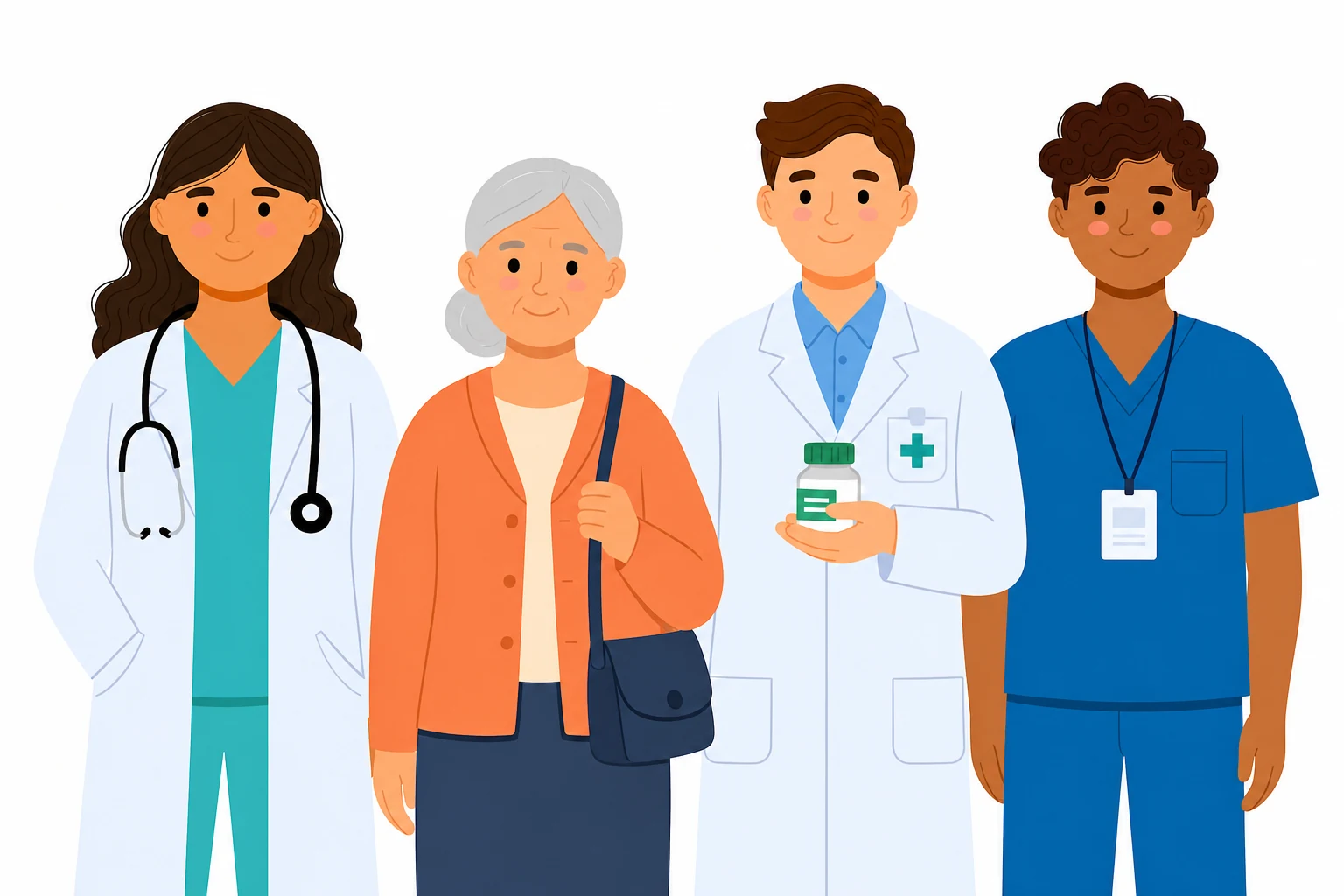
Illustration of doctors, a patient, and healthcare workers

Clodoc

Clodoc brings patients, doctors, pharmacists, and community health workers together in one connected ecosystem — making healthcare feel less complicated, with experiences simple and familiar enough for everyone to navigate.

Role
UXUI Design and Research
Timeline and Status
Ongoing for 1.5 years
Team
1 Lead designer and
2 UXUI designers

Most of my work is under NDA

I'm sharing what I can. For more details, feel free to contact me at digisha.vp@gmail.com or @LinkedIn

Overview of Clodoc

Clodoc is a healthcare platform connecting doctors, patients, and pharmacies — and the people around them who keep care running.

It didn't start with a feature list. It started with conversations: with doctors between patients, by observing pharmacy operations, with real people in our neighbourhood, watched and understood up close.

AI is used only where it genuinely reduces complexity for doctors and patients — never layered on as a feature for its own sake.

Built to fit how care actually happens, not to force doctors and patients into a workflow that's easier to code than to live with.

My Role

Working under the mentorship of our lead designer, my part in Clodoc has grown from understanding the problem to owning a module end-to-end.


  1. Starting point

    I started as a junior UX/UI designer, working under the mentorship of our lead designer.

  2. Understanding before designing

    My first job wasn't to design — it was to understand. I did deep research into the healthcare industry, interviewed our stakeholder doctors directly, and ran role-plays and brainstorming sessions with a colleague to step into the shoes of the people we were designing for — doctors, patients, and everyone in between.

  3. Into ideation and craft

    From there, I moved into ideation, wireframing, and visual design for the doctor-patient app, alongside broader research into healthcare workers around the world — to make sure what we were building held up beyond just our own context.

  4. Owning the pharmacy module

    Today, I'm working independently on the pharmacy module — owning it end-to-end, from ideation to final visual design — still under my lead designer's mentorship, but with my own hands fully on the wheel.

My contributions

What I can share about the work itself, without breaching what's under NDA.

Research

Grounding the pharmacy module in real operations

Contributed deep secondary research on pharmacy operations and community health worker systems across India and globally — shaping the design direction and information architecture for Clodoc's pharmacy and community health platform.
Design decision

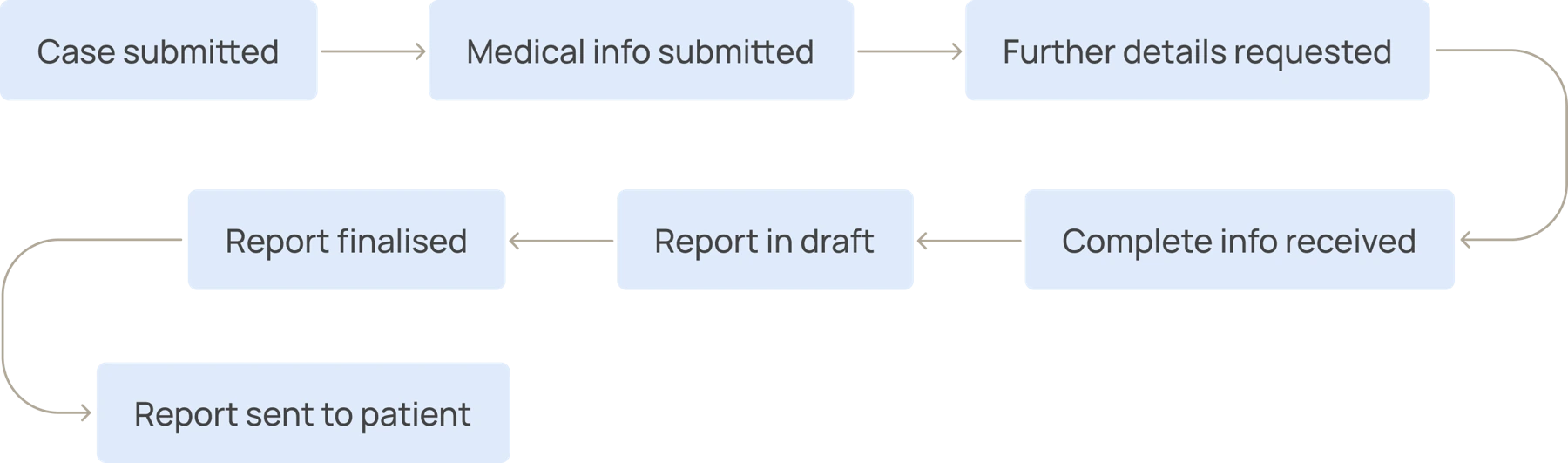
A progress tracker for second-opinion cases

Doctors and patients had no shared view of where a complex second-opinion case stood once it left the queue — creating uncertainty on both sides.

Before — no visibility

Case submitted, then silence until a decision arrives

After — staged tracker

Staged tracker flow: Case submitted, Medical info submitted, Further details requested, Complete info received, Report in draft, Report finalised, Report sent to patient

Direction: gave doctors and patients a shared, plain-language status — without exposing clinical detail — and reduced how often patients had to ask for updates.

Design decision

Prescription templates in an AI-assisted chat

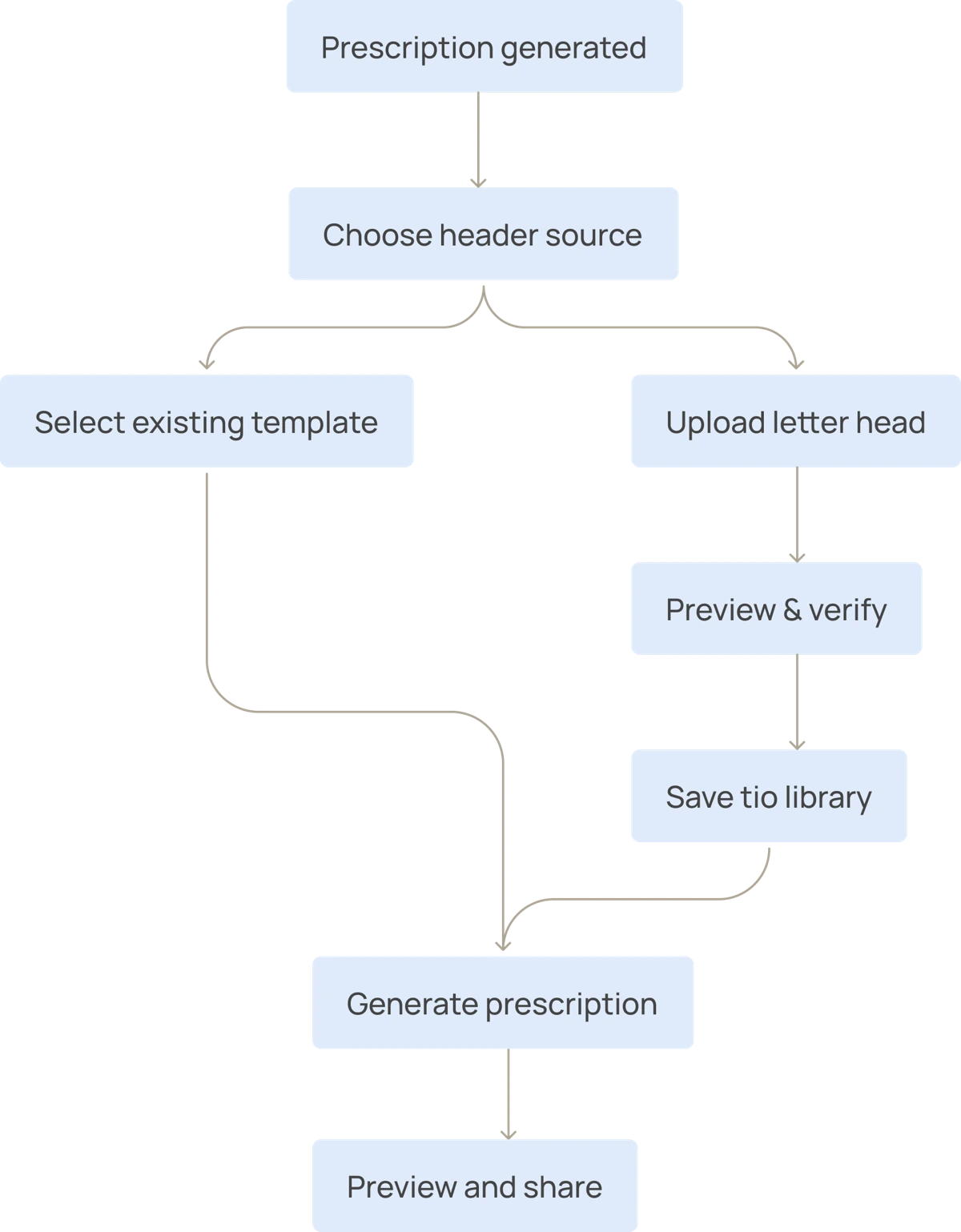
Led ideation and design for prescription template generation inside a doctor-facing AI-assisted chat interface, focused on feedforward and feedback cues that a busy, time-constrained doctor could read at a glance.

Prescription generating flow

Prescription generating flow: after a prescription is generated, choose a header source. Either select an existing template, or upload a letter head, preview and verify, and save to library. Both paths lead to generate prescription, then preview and share.
Ongoing project

Pharmacy module in real operations

Independently leading the pharmacy module — ideation to final visual design — with mentorship from the lead designer and research-backed decisions at every step.

What I've learned — and I'm still learning

Nothing starts out perfect

The goal is to get something out and test it, not get it flawless on the first try.

Failures teach more than success does

Collect them, don't fear them.

Write the problem, not the solution

A clear problem statement holds no suggestions — just what's wrong.

Talk to your team, always

It helps the work, and it helps everyone's headspace.

Don't take feedback personally

And don't fall in love with your first idea — stay open to it changing.

Ask more questions than feel necessary

The obvious ones are usually worth asking anyway.